
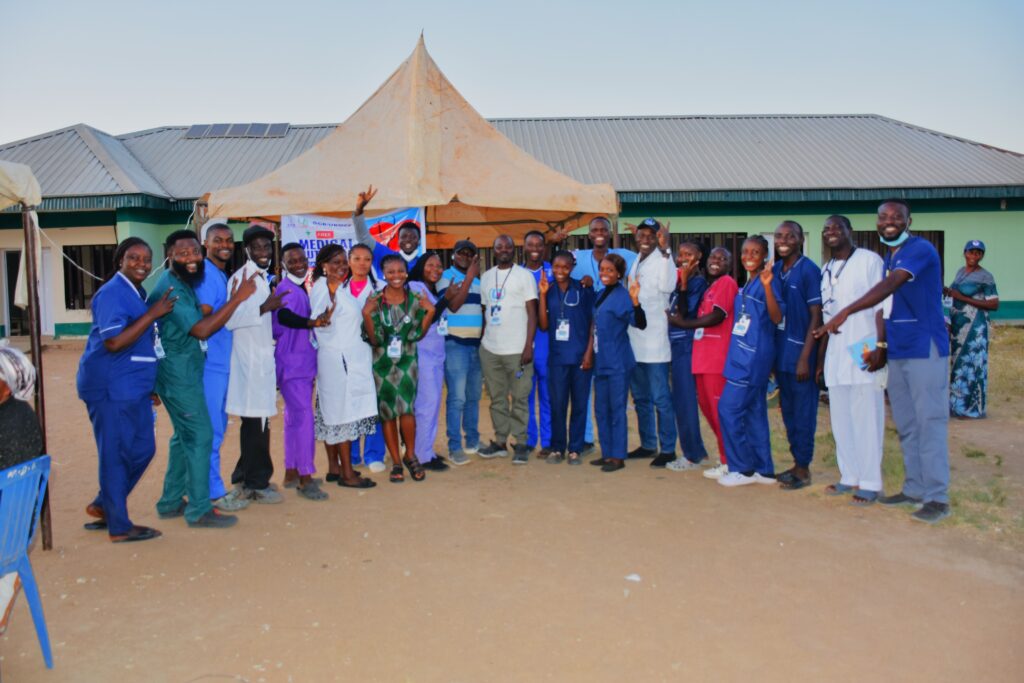
Disclimer
This report present firsthand documentation of the Kwassam Medical Outreach (November 20-23, 2025). Every data and findings presented here were recorded directly by our teams on grown. These findings represent an authentic and independent record of our activities and outcomes, without external influence to ensure transparency.
While we strive for precision in every detail, the evaluation team regrets any unintended errors or omissions regarding copyright or data presentation. We remain committed to the highest standards of accuracy in sharing our impact.
This document is the intellectual property of the organizing committee. Written permission is required before reproducing, distributing, or utilizing any portion of this report for external purposes.
Copyright © 2025 Umar Benjamin Medical and Empowerment Foundation.
Visual Documentation
GCB Media Team
Monitoring & Evaluation
Kaisih Ezekiel
Contact Information
Headquarters: No. 1, Calvary Science School Road, Adjacent ECWA Staff School, Farin Gada. +234 803 181 4440 | +234 803 291 9037
Email:gcbjosnigeria@gmail.com
INTRODUCTION
Kaduna State has over the years, suffered repeated banditry attacks that have displaced many residents from their ancestral homes. These violent incidents have left lasting effects on the health and well-being of citizens. Kwassam, a rural community in Kauru Local Government Area, has not been spared. Families continue to endure the trauma of losing loved ones and the struggle of rescuing relatives from armed groups.
Although Kwassam has a primary health center, it remains inadequate to serve the growing population, many of whom are in urgent need of counseling and medical care. The nearest hospital is located several kilometers away, and the dilapidated condition of the road makes access extremely difficult and dangerous. As a result, many residents are left without reliable healthcare support.
To address these pressing challenges, this medical outreach was organized to provide essential healthcare services, counseling, and support to the people of Kwassam, bridging the gap between their needs and the limited resources available
EXECUTIVE SUMMARY
GCB/UBMEF Medical Outreach in Kwassam was a multi-departmental initiative under the theme “Care, Compassion & Community.” It was organized to address the urgent health, psycho-social, and social support needs of the community.
The Medical Department, made up of dedicated doctors and nurses, attended to over 2,214 individuals, conducted 1,274 laboratory tests, and performed 316 dental procedures, including 36 extractions.
The Counseling Team provided emotional and psychological support to 735 residents, addressing mental health and personal challenges with empathy.
The Logistics Department ensured the smooth flow of operations, from setup to coordination.
The Media Team documented the entire outreach through photography and visual documentation for transparency, publicity, and future reference.
The music Team brought life and joy to the event, engaging children and adults with music and creative performances. A special addition to this year’s outreach was the Barbering Team, who offered free haircuts, adding smiles and boosting confidence among participants.
Together, these departments brought the outreach’s vision to life, care in action, compassion expressed, and community strengthened. The success of the event was made possible through seamless collaboration among management, staff, volunteers, community leaders, and security personnel. The experience also provided valuable insights to guide future interventions.
Objectives of the Medical Outreach
The medical outreach in Kwassam, Kauru LGA, Kaduna State was organized with the following objectives:
- Provide essential healthcare services
Deliver general medical consultations, maternal and child health services, and treatment for common illnesses. - Improve access to emergency and preventive care
Establish temporary clinics and mobile medical units to reach residents who cannot access distant hospitals. - Collect health data for planning
Document the health needs of the community to guide future interventions and strengthen healthcare delivery. - Strengthen community trust in healthcare systems
Build confidence among residents by showing commitment to their well-being and fostering collaboration with local health workers.
Methodology
The medical outreach in Kwassam, Kauru LGA, Kaduna State was carried out using a structured approach designed to maximize impact and reach the most vulnerable groups.
- Team Composition
The outreach team consisted of medical doctors, nurses, pharmacists, counselors, community health workers, media team, team of barbers and other Volunteers to supported logistics and mobilization. - Service Delivery
A temporary clinic was set up within Kwassam’s primary health center to serve as the central point of care. - Duration and Schedule
The outreach was conducted over two days, with daily sessions dedicated to general consultations, maternal and child health, counseling and health education. - Community Mobilization
Local leaders and community representatives were engaged to raise awareness, encourage participation, and ensure cultural sensitivity in service delivery. - Data Collection
Patient records, attendance figures, and health needs assessments were documented to evaluate the outreach’s effectiveness and guide future interventions. - Security, They organization collaborated with the security personals already posted to the community.there presence boost the confidence of volunteers to work freely without fear.
Results and Findings
Patient Statistics
During the outreach, a total of 2,214 individuals were successfully consulted:
- Adults: 1,794
- Children: 420
Additional services included:
- Laboratory tests: 1,274 patients
- Dental care: 316 individuals received scaling and polishing, with 36 extractions performed
Common Health Issues Treated
The outreach addressed a wide range of prevalent health conditions, including:
- sexually transmitted diseases (STDs)
- Malaria
- Peptic Ulcer Disease (PUD)
- Hypertension
- Hepatitis B and C
- Typhoid fever
- Gingivitis
- Respiratory infections (cold, cough, sore throat)
- Wound care
- Diabetes
- Rheumatism
- Intestinal worms
Tests Conducted
The following diagnostic tests were performed:
- Hepatitis B surface antigen (HBsAg)
- Hepatitis C virus (HCV)
- Random Blood Sugar (RBS)
- Fasting Blood Sugar (FBS)
- Rapid Diagnostic Test (RDT) for Malaria
- Widal Test
46 people Were diagnosis with hepatitis B an C while so many others with chronic STDs among other common diseases treated.The rising number of hepatitis cases calls for quick action through more awareness, easier access to testing, and available treatment options.
Challenges Encountered
While the outreach was successful, several areas for improvement were identified. Below are the key challenges faced during the program:
1. Medical & Laboratory Supplies
- Medicine Shortages: Essential medicines such as Albendazole and Metronidazole ran out earlier than expected due to high demand.
- Testing Limitations: The limited availability of malaria test kits and Widal reagents hindered effective laboratory diagnosis.
- Dental Equipment: The dental team faced difficulties due to a faulty dental chair and inconsistent water supply, affecting their efficiency.
2. Staffing & Environment
- Counselor Shortage: There were not enough counselors on site. Staff had to be drawn from other departments to fill the gap.
- Privacy Concerns: The absence of a private space for counseling made it challenging to conduct sensitive conversations with patients.
3. Media & Documentation
- Camera Limitations: Relying on a single professional camera limited angle coverage and left no backup option in case of failure.
- Audio & Interview Challenges: The media team lacked microphones and dedicated video equipment, making it difficult to capture clear interviews and live testimonials from participants.
Recommendations
To build on the success of this outreach and ensure long-term impact, the following recommendations are proposed:
Expand Diagnostic Capacity
Incorporate additional tests such as HIV, H. pylori, genotype, and pregnancy screening in future outreaches to improve early detection and treatment.
Enhance Community Health Education
Conduct regular awareness campaigns on hygiene, nutrition, preventive care, and management of chronic diseases.
Psychosocial Support
Integrate trauma counseling and mental health services into future programs to address the psychological impact of insecurity on families.
Enrich the media
For improved event documentation, we recommend investing in extra professional cameras and audio equipment (e.g. microphones). Where direct investment is not feasible, the organization can partner with media professionals or agencies .
Conclusion
The medical outreach in Kwassam, Kauru LGA, Kaduna State made a significant impact by meeting important health needs in a community affected by insecurity. Over 2,000 people received medical help, including tests, dental care, and counseling. The outreach also showed that many residents still face serious health problems and have little access to proper healthcare. This effort proves how important it is to bring medical care closer to rural communities and encourages more support and partnerships to help in the future.